Pig poster, public rage: Indore’s response to Pahalgam attack trends nationwide
4 min read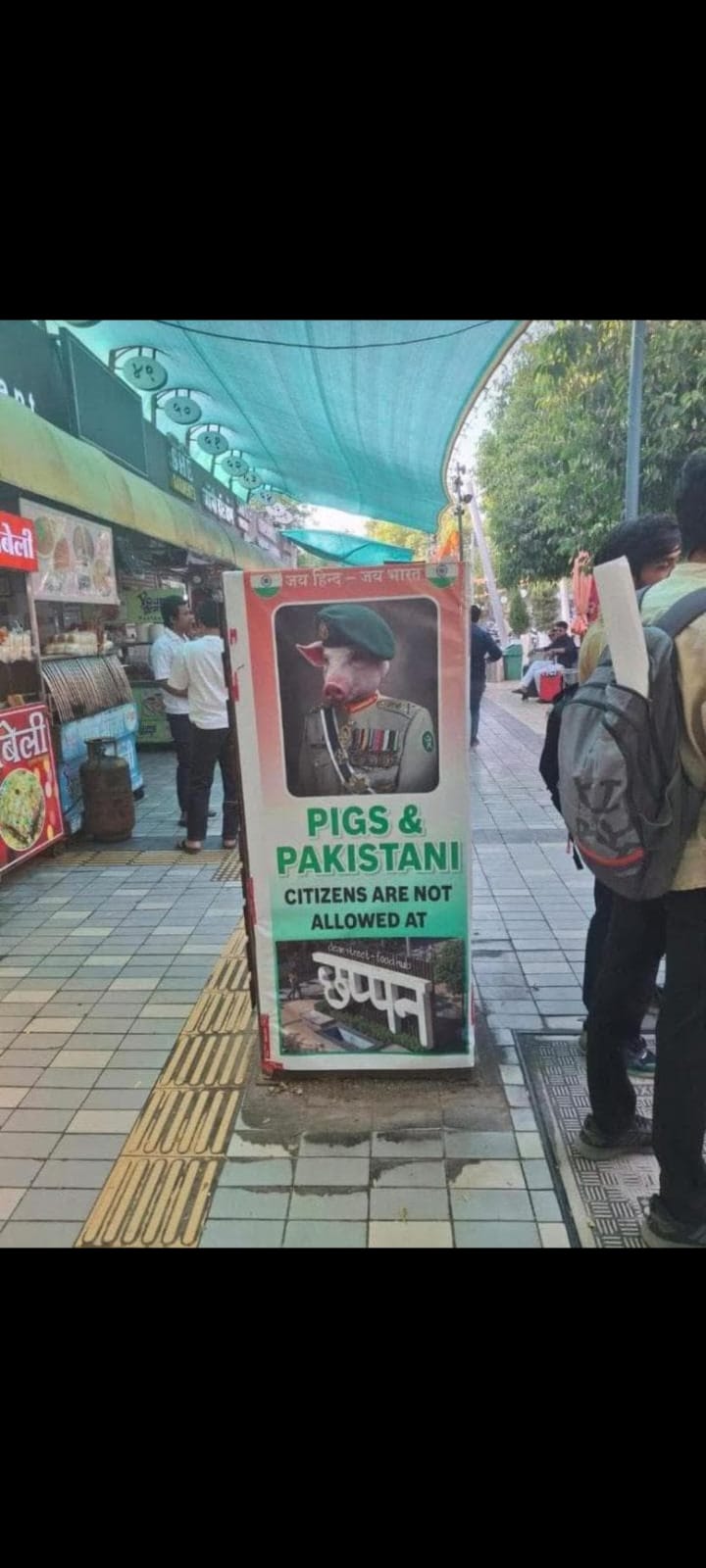
K K Jha
Indore: The horrific terror attack in Pahalgam, Jammu and Kashmir, on April 22, which claimed 28 lives, mostly tourists, has ignited a firestorm of outrage across India. In Indore, known for its cleanliness and vibrant community spirit, this anger has taken a unique and provocative form. A local eatery in the city has put up a poster with a morphed image of Pakistan Army Chief General Asim Munir, depicting him with a pig’s face, alongside the bold caption: “Pigs, Pakistanis Not Allowed.” The image, which has gone viral on X and other social media platforms, has sparked a wave of reactions, ranging from applause to introspection, as people grapple with this unconventional expression of grief and fury.
The Pahalgam attack, orchestrated by The Resistance Front, a proxy of the Pakistan-based Lashkar-e-Taiba, was marked by its brutality, with terrorists targeting non-Muslim tourists after demanding they recite Islamic verses. The massacre, coming days after General Munir’s inflammatory speech calling Kashmir Pakistan’s “jugular vein,” has been widely linked to Pakistan’s military establishment, fueling public anger. In Indore, this sentiment found a raw, unfiltered outlet at the eatery, which has become a focal point for locals expressing solidarity with the victims.
A Symbol of Defiance
The poster, first shared on X by users like
@BizNitiRahul
and
@republic
, quickly amassed thousands of views and reposts, with hashtags like #PahalgamTerroristAttack and #pahalgamattack trending across platforms. Locals have been flocking to the eatery, not just for food but to voice their support for what many see as a bold stand against terrorism. “This is not about hate; it’s about justice,” said Anil Sharma, a 34-year-old shopkeeper who visited the eatery to take a selfie with the poster. “The attack in Pahalgam was a slap on our face. This poster is our way of saying we won’t stay silent.”
Others echoed similar sentiments. Priya Malhotra, a college student, shared the image on her Instagram, captioning it, “When words fail, actions speak. Indore stands with Pahalgam’s victims.” She told me, “The morphed image is shocking, yes, but so was the attack. Sometimes, you need to shake people up to make them see the truth. Pakistan’s role in this can’t be ignored.”
Mixed Reactions on Social Media
The viral image has not been without controversy. On X, while many praised the eatery’s audacity, others questioned whether such provocative imagery risks escalating tensions.
@TheRealDharm
, a popular handle, posted, “After the brutal Pahalgam terror attack, emotions are high. Locals are turning up in numbers—not for food, but for solidarity.” However, another user,
@PeacefulPath22
, countered, “This kind of trolling might feel good, but does it solve anything? We need action, not just posters.”
The debate spilled over to other platforms like Instagram and WhatsApp, where the image has been shared in community groups. Some users called the poster “cathartic,” a way to channel collective grief, while others worried it could fuel communal divides. “It’s a fine line,” admitted Rakesh Yadav, a local businessman. “The anger is real, but we must ensure it doesn’t turn into something that hurts our own unity. Still, I admire the eatery’s courage.”
Indore’s response aligns with its history of vocal civic engagement, as seen in my own posts on X advocating for cleaner public spaces and better infrastructure. The city, which has consistently topped India’s cleanliness rankings, is no stranger to making bold statements. “Indore doesn’t just clean its streets; it cleans up apathy,” said Meena Rathore, a homemaker who joined a candlelight vigil for the Pahalgam victims. “This poster is crude, but it’s honest. It’s our way of saying we’re fed up with terrorism.”
The eatery’s owner, who requested anonymity due to security concerns, defended the poster. “We didn’t do this for publicity. We did it because we’re angry, like every Indian. Those 28 lives were not just numbers—they were families, dreams, futures. If this image makes people talk about Pahalgam, it’s worth it,” he said.
The Indore poster is part of a broader wave of public outrage. Protests have erupted in Delhi near the Pakistan High Commission, and the Indian government has taken stringent measures, including suspending the Indus Waters Treaty and reducing diplomatic ties with Pakistan. Prime Minister Narendra Modi, in a fiery speech, vowed to “identify, track, and punish every terrorist and their backers,” a message that resonates with the eatery’s defiant stance.
As the viral image continues to circulate, it raises questions about how a grieving nation channels its anger. For every supporter like Anil Sharma, who sees the poster as a rallying cry, there’s a skeptic like Neha Gupta, a teacher, who told me, “I understand the pain, but we must be careful. Trolling can’t replace justice. We need our government to act decisively, not just our eateries to make posters.”
The Indore eatery’s morphed image may be a fleeting moment in the aftermath of a tragedy, but it has struck a chord, reflecting a nation’s raw, unfiltered response to terror. As India mourns the Pahalgam victims, the poster stands as a testimony to a city—and a country—refusing to let the massacre fade into silence. Whether it’s a step toward justice or a spark for further debate, one thing is clear: Indore’s bold expression has ensured that the pain of Pahalgam remains in the national spotlight.