
India can be next global tech giant-If innovation stay indigenous-Gaurang Katyal
4 min read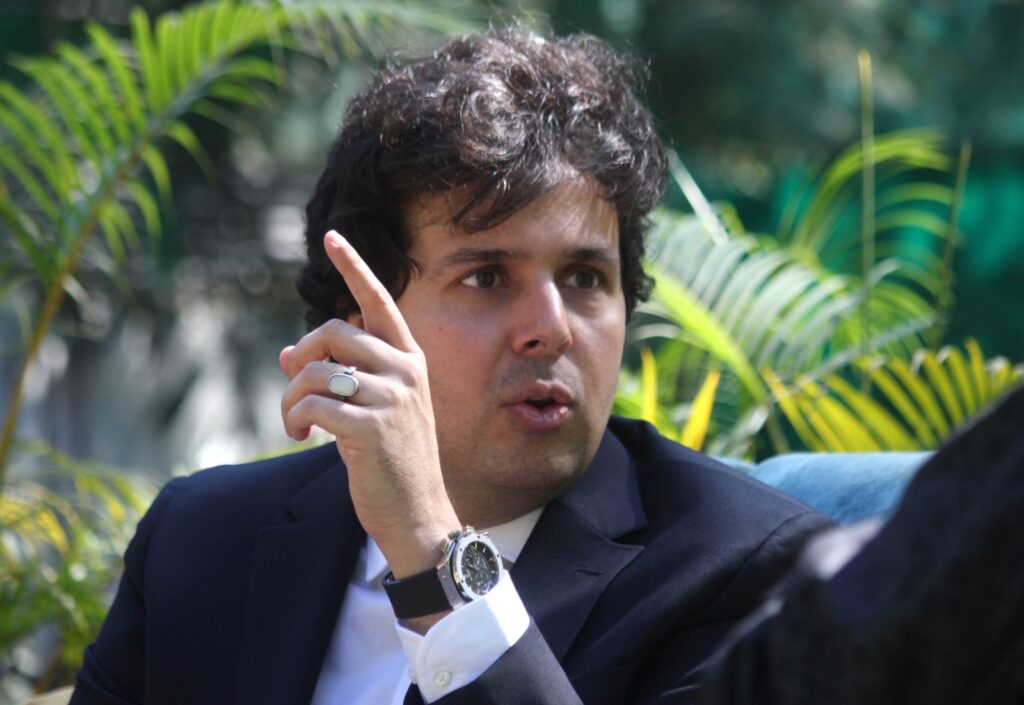
- Safeguarding Billions Online: Meta’s Gaurang Katyal on Cybersecurity, AI Threats, and India’s Digital Future *
Surbhi Khichi
The contemporary world has truly become a global village, driven by the internet. With over a billion internet users, India stands as one of the world’s fastest-growing digital markets, second only to China. However, this rapid expansion has also brought rising threats—phishing, cyber scams, app fraud, malware, and now AI-driven deepfakes.
In a special conversation, we speak with *Gaurang Katyal, a distinguished product leader with over 12 years of experience at *Meta (Facebook) and Microsoft, to understand how global technology companies tackle these threats at scale and what India’s digital ecosystem must do to stay secure.
Until recently, Gaurang served as Head of Product for Cybersecurity and Mobile App Integrity at Meta, where he led product vision and execution for defense systems protecting billions of users worldwide. His work spanned Ads, Trust & Safety, and Consumer Products, including Messenger Kids—translating high-level strategy into real-world systems that safeguard users across platforms.
Meta’s Cybersecurity and Mobile App Integrity Defense
As internet adoption grows, so do vulnerabilities. According to Gaurang, threats may look similar globally, but responses must account for local nuances.
“No market is fundamentally different,” he explains. “What changes are user behavior, local attitudes, and how Machine Learning models are tuned to detect threats.”
At Meta, any suspicious link, message, or app—whether shared on WhatsApp or advertised across platforms—is evaluated using advanced Machine Learning models, a subset of AI. Human moderation alone would be impossible at this scale.
Phishing apps, ransomware demanding payment, spyware tracking user activity, and malicious APK files are among the most common attack vectors.
“All of this comes through apps,” Gaurang says. “User security is our primary focus. Only apps that pass strict scrutiny are allowed to be advertised in Meta’s ecosystem.”
When fraudsters bypass official app stores and distribute APK files directly, Meta’s teams work to block sharing, analyze the code, crawl associated websites, and match patterns against known malware databases.
“To prevent clickbait and fake URLs, Meta has even purchased domains that closely mimic authentic ones,” he adds.
How Can Users Protect Themselves?
While tech companies invest heavily in defense systems, Gaurang emphasizes that user awareness remains critical.
“Anyone with internet access must stay alert. Use the same common sense online that you use in real life.”
He advises users to avoid clicking on unknown links, opening unsolicited messages, or downloading apps from unverified sources.
“The world evolves, crimes evolve, and so do countermeasures. Today, systems can anticipate attacks even before they occur through practices like red-teaming.”
Lessons for Indian Platforms and Policymakers
India is not insulated from global cyber threats. Indigenous platforms must adopt strong foundational frameworks to survive and scale.
“Measurement is key,” Gaurang stresses. “If you can’t measure a threat down to its root, you’ll likely fail to solve it.”
Equally important is regulation. Without strict enforcement and meaningful penalties, cybercrime becomes low-risk and high-reward.
“A penalty must pinch,” he says candidly. “Legal systems must evolve at the pace of technology.”
He also underlines leadership responsibility—building products that prioritize user safety from the design stage, backed by independent watchdog mechanisms.
Advice to Indian Tech Startups
India’s startup ecosystem is rich with talent, but global success requires original thinking.
“Indian innovators need to develop something organic in the Indian ecosystem and take it to the globe—rather than cloning existing ideas.”
Having shipped products like Messenger Kids and scaled multi-billion-dollar ad platforms, Gaurang believes founders rooted in Indian culture often have an advantage in understanding diverse user needs.
“Grasp technology, trends, and innovation deeply,” he advises. “Solve a problem in India first, then adapt it globally.”
He acknowledges challenges such as funding gaps and regulatory complexity but credits state and central governments for increasing support through startup-friendly initiatives.
The Case for Cross-Platform Intelligence Sharing
Gaurang has been a strong advocate of cross-platform collaboration, likening it to intelligence alliances between nations. In his article, “The Missing Layer of Trust and Safety,” he argues that shared threats demand shared defenses.
“Cross-platform collaboration is a win-win situation. One platform catches a threat early; others benefit from that intelligence.”
However, he notes challenges in implementation—bureaucracy, infrastructure compatibility, and the effort required to transition fully to AI-driven systems.
“Facilitation is difficult,” he admits, “but absolutely necessary.”
India’s Digital Future
Concluding on an optimistic note, Gaurang says the global spotlight is firmly on India.
“Today, the world is looking up to India—a growing economy and a dream market for investors.”
He believes India has the talent and pedigree to build the next generation of global tech giants.
“Facebook started as a university project. With the right resources and relentless thinking, India can build the next Google or Meta.”
“We are not far away,” he affirms. “We are on the right path.”