SOPA calls for “Soy Seed Revolution” to make India self-reliant in edible oil
3 min read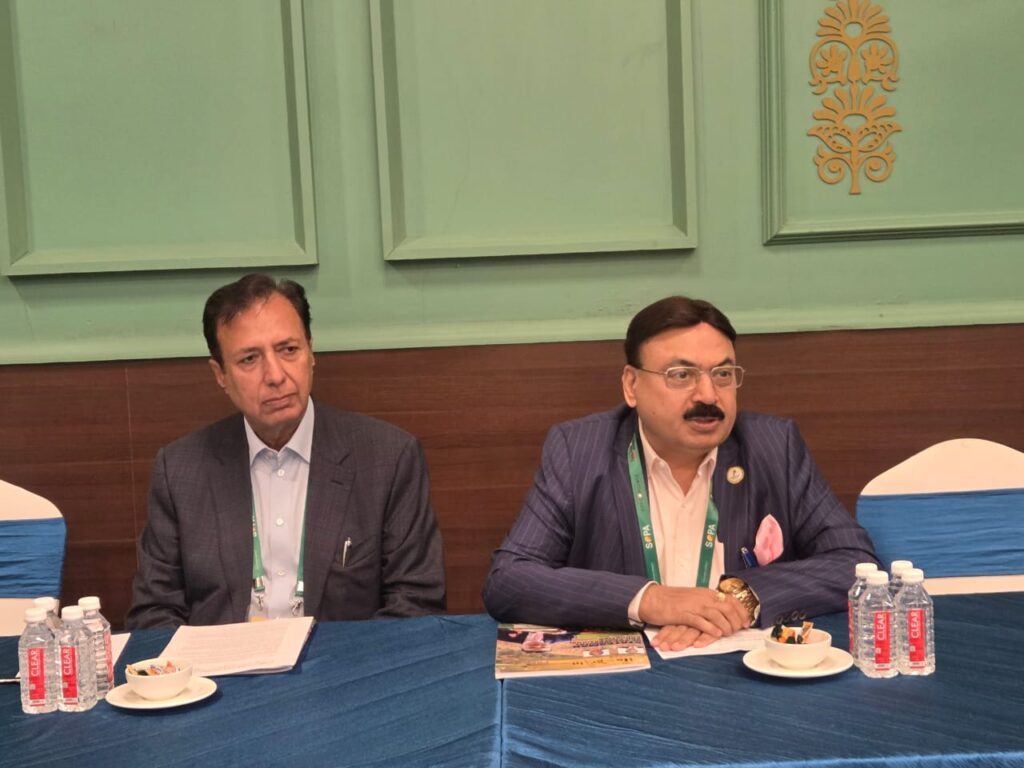
Calls to declare 2026 as a year of Soybean
Indore(Team Newsbuddy): Dr. Davish Jain, Chairman of the Soybean Processors Association of India (SOPA), has unveiled an ambitious national roadmap to unleash a “Soy Seed Revolution” aimed at transforming India’s soybean sector, reducing edible oil imports, and ensuring protein security for millions.
Addressing media persons during the Eighth International Soy Conclave 2025 in Indore, Dr. Jain emphasized that the future of India’s edible oil and protein economy hinges on a single powerful lever — high-yielding, climate-resilient soybean seeds.
“The soybean is not just a crop—it is an economic engine, a nutrition powerhouse, and the hope of millions of Indian farmers. The time has come to ignite a Seed Revolution that multiplies yield, restores farmer confidence, and makes India truly self-reliant in oil and protein,” said Dr. Jain.
Dr. Jain announced that SOPA is leading a national mission, in collaboration with ICAR institutes and seed companies, to develop, produce, and distribute high-yielding and climate-resilient soybean varieties across all major soybean-producing states. India’s current productivity stands at 1.1 tonnes per hectare, less than half the global average of 2.6 tonnes. SOPA’s vision aims to double productivity to 2 tonnes per hectare within five years by ensuring that at least 70% of farmers adopt improved seed varieties.
“If we can increase our yield even by 500 kilograms per hectare, India can save billions in edible oil imports and put more money directly into the hands of farmers,” Dr. Jain noted.
He emphasized that this Seed Revolution would serve as the foundation for achieving multiple national goals — import reduction, food fortification, soymeal export growth, and rural prosperity.
Reducing Import Dependency through Domestic Productivity
India imports more than 60% of its edible oil requirement, spending over ₹1.7 lakh crore annually in foreign exchange. Dr. Jain underscored that the most sustainable way to reduce this dependency is to raise domestic oilseed productivity rather than relying on imports. “True Atmanirbhar Bharat must mean Atmanirbhar in oilseeds and protein too,” he said, adding that higher productivity and value addition can save the country billions and create rural jobs.
Soy Foods: Affordable, Sustainable Protein for Every Indian
Calling soybean the “Shakti ka Ann” (Food of Strength), Dr. Jain urged the government and food industry to popularize soy-fortified atta, soy milk, tofu, and snacks through public distribution systems, mid-day meals, and awareness drives.
He emphasized that over 60% of Indians consume less protein than recommended, and soy protein — being three times cheaper than pulses — offers an affordable solution to India’s hidden hunger. “If soy foods become part of our daily meals, we can fight malnutrition and make protein accessible to all,” Dr. Jain said, urging policymakers to declare 2026 as the “Year of Soybean.”
Dr. Jain reiterated that soybean meal remains the backbone of India’s ₹1.2 lakh crore poultry, aquaculture, and livestock industries.
He cautioned against the growing use of low-cost substitutes like DDGS, which compromise quality and nutrition. “Soymeal is irreplaceable for producing healthy, safe, and sustainable animal protein,” he said, calling for policies that encourage its domestic utilization and export.
Highlighting India’s strong reputation for non-GMO soybeans, Dr. Jain said that global demand for non-GM products is rising sharply.
He urged policymakers to position India as a preferred supplier of non-GM soybeans, soymeal, and soy-based products by establishing efficient logistics, facilitating trade, and offering export incentives. “The world trusts Indian soy for its purity. We must leverage this trust to expand our export footprint,” he stated.
SOPA chairman setting targets for the next five years, has called for doubling soybean productivity from 1.1 to 2 tonnes per hectare.
Provide improved seed varieties to 70% of farmers within three years.
Reduce edible oil imports by 25% through yield gains and efficient processing.
Double domestic soy food consumption by 2030 through awareness and innovation.
Expand non-GMO soy exports and strengthen India’s share in global soymeal markets.