Indore’s Metro Milestone: A historic launch on Devi Ahilyabai Holkar’s 300th birth anniversary
4 min read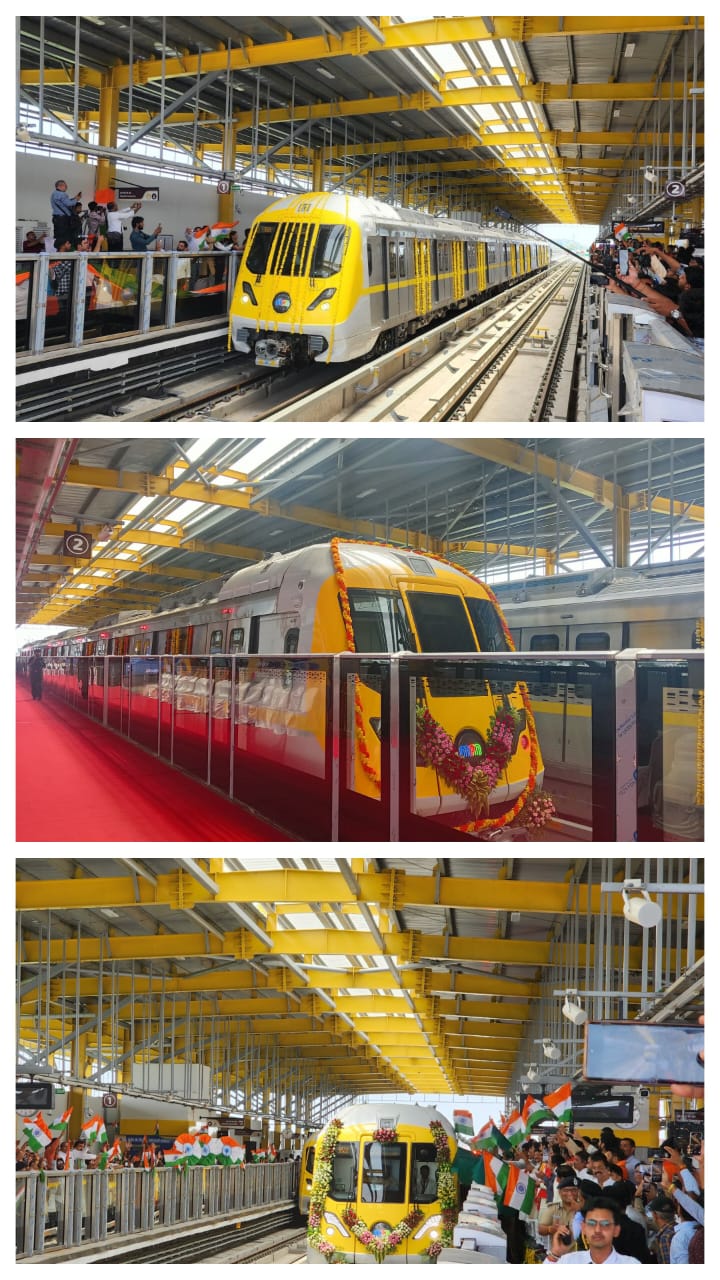
K K Jha
Indore: India’s cleanest city, Indore, today rolled into a new era of modernity with the grand launch of its first-ever metro rail service, a moment that resonated with pride and celebration across Madhya Pradesh. Prime Minister Narendra Modi virtually flagged off the Indore Metro from Bhopal, marking a historic day that coincided with the 300th birth anniversary of the revered Queen Devi Ahilyabai Holkar, a symbol of justice, empowerment, and progress in the Malwa region.
The inaugural ride, which began at 11:00 AM from the Gandhi Nagar Metro Station—now proudly named the Devi Ahilyabai Metro Terminal—was a joyous affair, especially for the women of Indore. In a heartfelt tribute to the legacy of Devi Ahilyabai, known for her contributions to women’s empowerment and cultural preservation, the first ride was dedicated to women passengers. From Swachhata Didis (sanitation workers) to IT professionals, women from all walks of life boarded the sleek, modern metro, erupting in cheers, dancing, and chanting patriotic slogans like “Bharat Mata Ki Jai” as the train glided along its 5.9-kilometer Super Priority Corridor.
A metro system for a modern Indore
The Indore Metro, a Rs 7,500-crore project, is a transformative step for the city’s public transportation. The first phase, inaugurated today, covers a 5.9-kilometer stretch of the Yellow Line, connecting Gandhi Nagar to Super Corridor Station No. 3. This corridor includes five stations: Gandhi Nagar, Super Corridor 6, Super Corridor 5, Super Corridor 4, and Super Corridor 3. The entire Yellow Line, spanning 31.32 kilometers with 28 stations (22.62 km elevated and 8.7 km underground), is designed to ease traffic congestion, reduce pollution, and provide a fast, eco-friendly commute. The initial stretch of 5.9 km, costing Rs 1,520 crore, promises to redefine urban mobility in Indore.
The metro is equipped with cutting-edge features, including emergency buttons, intercom systems, and audio announcements for visually impaired passengers, ensuring safety and accessibility. Female guards at every station and CCTV monitoring add an extra layer of security, particularly for women travelers. To celebrate the launch, Madhya Pradesh Urban Development and Housing Minister Kailash Vijayvargiya announced that metro rides will be free for the first seven days, accessible via QR code scanning at stations. Post this promotional period, fares are expected to range from Rs 20 to Rs 60, making the metro an affordable option for all.
A tribute to heroes and heritage
In a nod to India’s rich history and valor, the metro stations are named after iconic figures and events. The Gandhi Nagar station honors Devi Ahilyabai Holkar, while others are named after women warriors like Rani Avanti Bai and Rani Jhalkari Bai, and one station commemorates Operation Sindoor, celebrating the Indian Army’s courage. “We are not just launching a metro but honoring the spirit of our heroes who shaped our nation,” said Minister Kailash Vijayvargiya during a press briefing. “This is a proud moment for Indore, as we transition from tempos to a world-class metro system, fulfilling our promise to make this city a beacon of modern urban living.”
Vijayvargiya, a native of Indore, shared a personal reflection: “I’ve seen this city evolve from tempos to metro. We’ve traveled in tempos, and today, we’re riding the metro. This is a historic day for Madhya Pradesh.” He expressed optimism about the metro’s expansion, noting that within six months, services could extend to other parts of the city, eventually covering the full 31.32-kilometer network.
Indore Mayor Pushyamitra Bhargav echoed this sentiment, calling the launch “a proud moment for Indore.” He highlighted the city’s transformation, stating, “From tempos to metro, Indore is now a symbol of progress. This metro is not just a transit system but a testimony to our city’s forward-looking spirit.” Bhargav also proposed naming upcoming stations after other iconic women warriors like Rani Lakshmibai, reinforcing Indore’s commitment to celebrating women’s contributions.
A day of empowerment and celebration
The launch was part of a larger event in Bhopal, where Prime Minister Modi addressed the ‘Lokmata Devi Ahilyabai Mahila Sashaktikaran Maha Sammelan,’ a women’s empowerment conference attended by nearly two lakh women. Modi emphasized Devi Ahilyabai’s legacy, saying, “Her vision of service, governance, and self-respect continues to inspire us. Today’s metro launch and the naming of stations after women warriors reflect her spirit of empowerment.” He also referenced Operation Sindoor, describing it as “India’s biggest and most successful anti-terror operation,” a symbol of the nation’s resolve.
The Prime Minister also inaugurated two new airports in Datia and Satna and released a commemorative postage stamp and a Rs 300-denomination coin—the first of its kind globally—dedicated to Devi Ahilyabai. Chief Minister Dr. Mohan Yadav called it “a historic day for Madhya Pradesh,” emphasizing the state’s leap toward modern infrastructure.
Indore’s Journey: From tempos to metro
Over 150 years ago, the Holkar rulers initiated the city’s first railway line to Khandwa, completed in 1876. From tempos and minibuses in the 1980s to the efficient BRTS system introduced in 2005, Indore has consistently embraced progress. The metro, with its 13 rakes (6–7 in daily use), marks the culmination of this journey, blending heritage with innovation.
As women passengers took selfies and celebrated their first metro ride, the city buzzed with excitement. Indore Municipal Commissioner Shivam Verma congratulated residents and outlined plans for seamless connectivity, including parking facilities and integration with city buses and e-rickshaws. “This is just the beginning,” Verma said. “The metro will transform how Indore moves.”