
Combined consumption of tobacco, alcohol increases risk of oral cancer: Dr Acharya
3 min read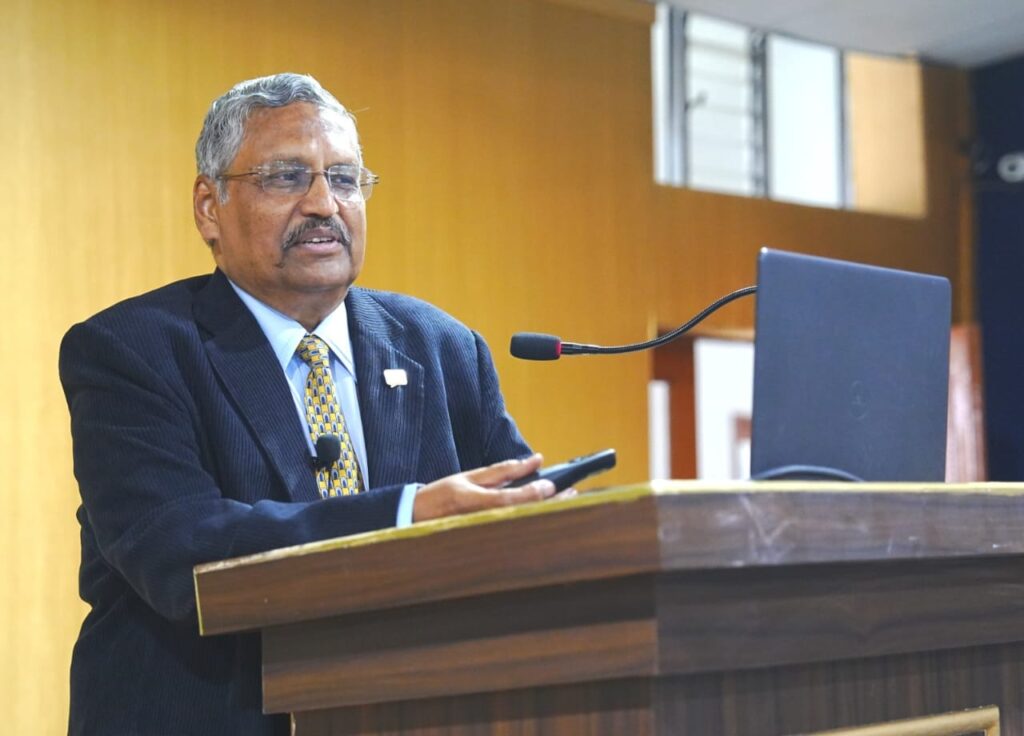
Indore (Team Newsbuddy): World Head & neck Cancer Day (WHNCD) is being observed today. This is the 11th WHNCD, initiated by the International Federation of Head & Neck Oncologic Societies (IFHNOS) to draw the world’s attention to effective care and control of head and neck cancer, so that everyone works together and disseminates knowledge related to prevention, early detection, affordable care, evidence-based management, rehabilitation, etc.
Dr. Dilip Kumar Acharya, National President, IMA Cancer and Tobacco Control Committee, said that head and neck cancer is one of the most preventable cancers and can be easily detected with timely screening and early diagnosis. Unfortunately, people still reach doctors at an advanced stage.
Head and neck cancers (HNC) are a significant public health concern worldwide, with notable regional and demographic disparities. Head and neck cancers include cancers that can occur in various regions of the head and neck – oral cavity, pharynx, larynx, nasal cavity, sinuses, and salivary glands.
According to GLOBOCAN 2022, it has a global incidence of over 9 lakhs and causes 4.5 lakh deaths annually. Apart from mortality, it is also a major cause of morbidity and disability in many parts of the world.
According to GLOBOCAN 2022, about 2.8 lakh new cases of head and neck cancer are reported in India every year and 1.37 lakh patients die every year. Cancer of the lip and oral cavity is the second most common cancer in India after breast cancer.
Dr. Acharya said that oral cancer is a major public health problem. Greater emphasis should be placed on primary prevention of oral cancer by preventing people from smoking/chewing tobacco and by cessation of tobacco consumption. Tobacco consumption is the most prevalent and most preventable cause of head and neck cancer. Betel nut alone is also considered a Group 1 carcinogen. The World Health Organization (WHO) has also identified unsafe alcohol consumption as a risk factor for many cancers including oral cancer. The risk increases manifold when alcohol and tobacco are consumed together. Exposure to smoke and fumes from cooking fuels, and recent evidence suggests that human papilloma virus (HPV) may be associated with some oropharyngeal and oral cancers. HPV-16 and HPV-18 have been found in cases of oral cancer.
In the last few years, more and more young patients are being affected by oral cancer and we all know that, early diagnosis, appropriate treatment – is the key to good outcomes. The oral cavity is easily accessible for inspection and doctors and even patients can detect cancer at an early stage, e.g., if they have leukoplakia (white patches), erythroplakia (red patches) in the buccal mucosa or submucous fibrosis (difficulty in opening the mouth) – they should consult a doctor – as all these could be precancerous conditions. And for those who don’t, we should teach self-examination of the oral cavity, so that oral lesions can be detected at a precancerous stage or at a very early stage of cancer.
Dr. Acharya, informed that betel nut, which is known to cause precancerous conditions like submucosal fibrosis in the mouth, has been identified as an oral carcinogen in humans, with evidence of a dose-response relationship provided by the International Agency for Research on Cancer.
Oral Cavity Precancerous Conditions: Most oral cavity cancers in India are precancerous lesions, which have the same etiology as oral cavity cancers and are found almost entirely in tobacco users. There are three major types of lesions. The most common type is leukoplakia (prevalence 0.2-5.2% in India), with a malignant transformation rate of 0.13 to 10%. Erythroplakia is the most serious of all precancerous lesions and has a much higher risk of malignant transformation than leukoplakia. The other precancerous lesion is submucosal fibrosis, which has a malignant transformation rate of about 17% and is considered to be an important factor in the increasing incidence of oral cancer in persons aged 35 years and below in India.
IMA supports this international movement and advises its members to organize awareness programmes for tobacco control/prohibition-cancer prevention, public and oral cancer screening, early diagnosis activities.