
Race for India’s Next Vice President: Harivansh, Chari, or a surprise pick?
5 min read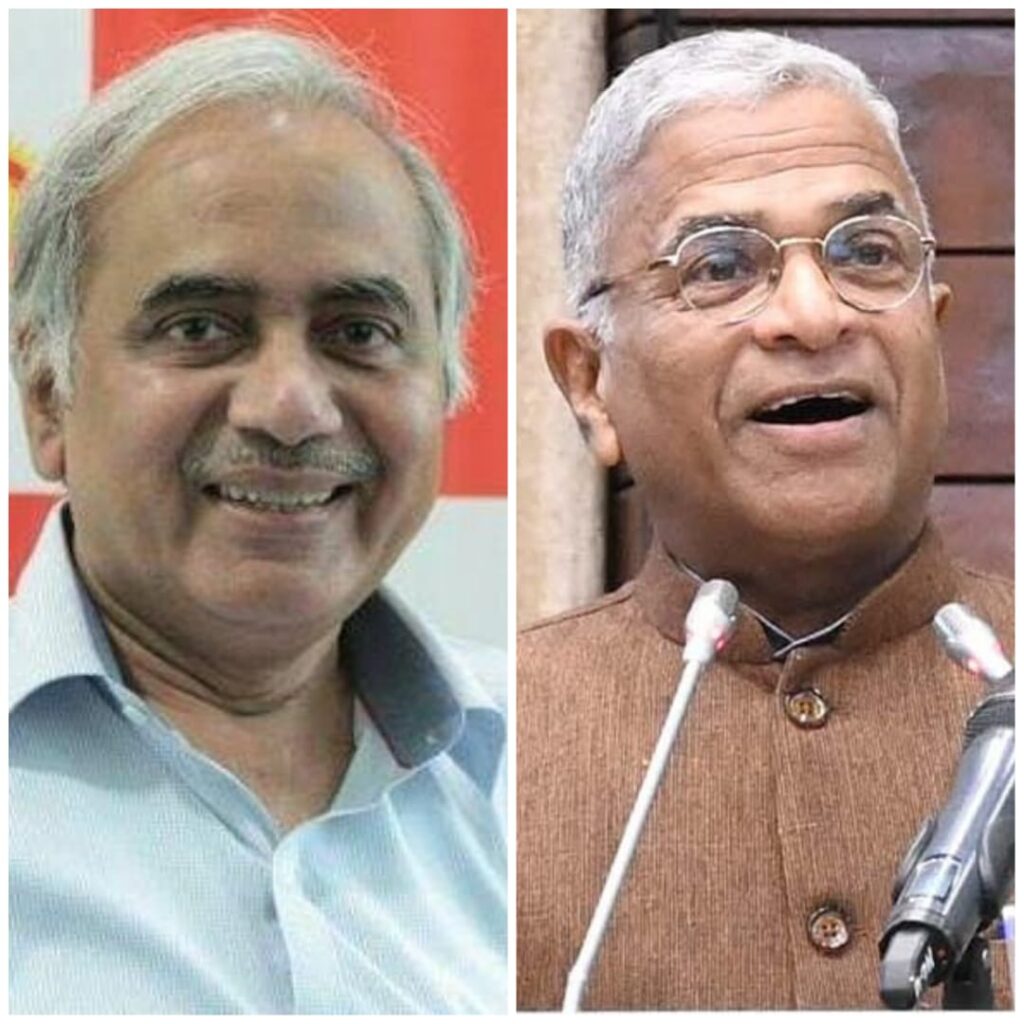
Raveesh Benjamin
As India gears up for the selection of its next Vice President, who also serves as the Chairman of the Rajya Sabha, political circles are abuzz with speculation. The Bharatiya Janata Party (BJP), as the leading force in the National Democratic Alliance (NDA), is at the center of this decision-making process. With the term of the current Vice President, Jagdeep Dhankhar, set to end in August 2027, discussions are intensifying about who will succeed him. Two names have emerged prominently in recent media and political discourse: Harivansh Narayan Singh, the current Deputy Chairman of the Rajya Sabha, and Seshadri Chari, a seasoned Rashtriya Swayamsevak Sangh (RSS) ideologue and former editor of the RSS mouthpiece Organiser. While other names like Rajnath Singh, Nitin Gadkari, and Thawar Chand Gehlot are also being floated, the spotlight is firmly on Harivansh and Chari. The decision, however, is far from straightforward, as it involves balancing regional aspirations, electoral strategies, and ideological loyalties.
Harivansh Narayan Singh, a Rajya Sabha member from Bihar and the current Deputy Chairman, is a frontrunner in the race. His credentials are impressive: a seasoned journalist, former editor of Prabhat Khabar, and a trusted figure in Bihar’s political landscape. Hailing from Sitabdiara, the village of revolutionary leader Jayaprakash Narayan, Harivansh carries a symbolic connection to the socialist movement that once shaped Indian politics. His tenure as media advisor to former Prime Minister Chandrashekhar further bolsters his political pedigree.
However, Harivansh’s journey is not without complications. His association with Prabhat Khabar, owned by the Jhawar family of Usha Martin, has raised eyebrows due to the Enforcement Directorate’s raids on the group, which uncovered Rs 190 crore in a single operation. This scrutiny could pose a challenge to his candidacy, as the BJP may hesitate to elevate someone linked to financial controversies. Moreover, while Harivansh belongs to the Thakur community, a significant vote bank in Bihar, he lacks the grassroots influence to sway elections decisively. His ideological shift from socialism to aligning with the BJP’s ally, Nitish Kumar’s Janata Dal (United), has also drawn criticism. Some view him as a pragmatic operator rather than a charismatic leader with the fire of a Jayaprakash Narayan.
From an electoral perspective, elevating Harivansh could be a strategic move for the BJP in Bihar, where assembly elections are looming. His experience as Deputy Chairman and familiarity with parliamentary procedures make him a safe choice for the Vice Presidency. Yet, his limited appeal among Bihar’s Thakur voters and the shadow of the Usha Martin controversy could undermine his candidacy. If the BJP aims to avoid leaders with a history of party-hopping or controversies, Harivansh’s chances may diminish.
In contrast, Seshadri Chari represents a different kind of candidate—one deeply rooted in the RSS ecosystem. A former editor of Organiser, Chari is a multilingual intellectual with a nuanced understanding of national and international affairs. Hailing from Thanjavur, Tamil Nadu, he is a Brahmin with strong ties to the RSS, having served as a key functionary when the organization divided India into four zones, with Chari overseeing Mumbai and Mohan Bhagwat, the current RSS chief, managing Nagpur. His fluency in Marathi, Tamil, Hindi, and English, coupled with his ideological alignment with the Sangh, makes him an appealing choice for the BJP.
Chari’s candidacy aligns with the BJP’s broader strategy to expand its footprint in South India, particularly in states like Tamil Nadu and Kerala, where it has historically struggled. A South Indian Vice President could signal the party’s commitment to inclusivity and regional representation, countering accusations of being a “Hindi heartland” party. Sources suggest that Prime Minister Narendra Modi holds Chari in high regard, valuing his intellectual rigor and loyalty to the RSS. However, his lack of electoral experience and limited public recognition could be drawbacks. The RSS, which wields significant influence over BJP’s decisions, must decide whether to prioritize a loyal ideologue like Chari for a constitutional post or opt for a more politically expedient candidate.
Other Contenders and Strategic Calculations
While Harivansh and Chari are leading the discussions, other names are also circulating. Senior BJP leaders like Rajnath Singh, Nitin Gadkari, and Thawar Chand Gehlot bring experience and stature, but their elevation to the Vice Presidency could disrupt the party’s internal power dynamics. Manoj Sinha, Ram Nath Thakur, Shashi Tharoor, Arif Mohammad Khan, and Ghulam Nabi Azad have also been mentioned, though their chances appear slim due to various political constraints. For instance, Shashi Tharoor and Ghulam Nabi Azad, prominent opposition figures, are unlikely to secure the BJP’s backing.
Another intriguing proposal involves elevating BJP President J.P. Nadda to the Vice Presidency while appointing former Haryana Chief Minister Manohar Lal Khattar as the new party president. This move could streamline the BJP’s leadership transition while maintaining its grip on key constitutional posts. However, such a decision would hinge on the party’s ability to balance its national ambitions with regional electoral compulsions, particularly in Bihar and Kerala.
The Bigger Picture: The selection of the next Vice President is not just about filling a constitutional post; it is a calculated move to strengthen the BJP’s electoral prospects. Bihar, with its complex caste dynamics and upcoming assembly elections, remains a critical battleground. Harivansh’s elevation could solidify the BJP’s alliance with Nitish Kumar’s JD(U), but his limited influence among voters may not yield significant dividends. In contrast, Chari’s candidacy could bolster the BJP’s outreach in South India, particularly in Tamil Nadu, where the party is keen to challenge the Dravidian parties.
The RSS, as the ideological backbone of the BJP, faces a dilemma: should it reward lifelong Sangh workers like Chari, who embody its core values, or prioritize political pragmatism by backing a candidate like Harivansh, who aligns with coalition dynamics? The BJP’s leadership, led by Narendra Modi and Amit Shah, is known for prioritizing electoral victories over ideological purity. Loyalty, while valued, often takes a backseat to strategic considerations. The party’s decision will likely reflect a delicate balance between consolidating power and projecting inclusivity.
Fresh Insights and Speculations
Recent media reports suggest that the BJP is leaning toward a candidate who can bridge regional and ideological divides. Harivansh’s experience in the Rajya Sabha makes him a low-risk choice, but his lack of charisma and the Usha Martin controversy could tilt the scales against him. Chari, on the other hand, is gaining traction as a “dark horse” candidate, with some analysts arguing that his South Indian roots and RSS credentials make him an ideal fit for the BJP’s long-term vision. Posts on X also highlight the party’s focus on South India, with one user noting, “BJP is serious about Tamil Nadu in 2026. A figure like Seshadri Chari could be a game-changer.”
The BJP’s decision will also be influenced by its choice for the President of India, as both posts are often decided in tandem to reflect a broader political strategy. Speculation is rife that the party may opt for a North-South combination, with a Vice President from the South (like Chari) and a President from the North (like Khattar or Nadda). This approach could appease regional sentiments while maintaining the BJP’s dominance.