
Poison in pipes: Indore tragedy triggers national outrage, global embarrassment
3 min read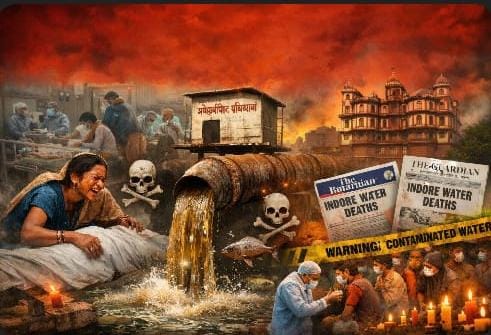
K K Jha
Indore: Celebrated globally as India’s cleanest city, Indore is grappling with a grave public health disaster that has shaken its reputation and exposed disturbing gaps in urban governance. The death of nearly 15 people due to contaminated drinking water in a congested, lower-income neighbourhood has triggered nationwide anger and international scrutiny, with global media questioning the credibility of the city’s much-touted cleanliness rankings.
Once projected as a model of urban hygiene and efficient waste management, Madhya Pradesh’s commercial capital now finds itself at the centre of a tragic water contamination crisis. According to local media reports, at least 15 people have lost their lives after consuming polluted tap water, though official confirmation of the death toll is still awaited. At least 32 patients remain in intensive care units, battling severe symptoms including vomiting, diarrhoea and high fever.
The crisis has attracted sharp international attention, with reputed global newspapers questioning how a city lauded for waste segregation and sanitation could allow such a catastrophic lapse in drinking water safety. The incident has not only caused local anguish but has also inflicted national and international embarrassment on India’s urban governance narrative.
Residents of the affected locality revealed that they had been flagging complaints about foul-smelling and visibly contaminated tap water for months. However, these warnings allegedly went unaddressed, lost in what residents describe as a bureaucratic maze of red tape and apathy.
Preliminary investigations by authorities suggest that a public toilet constructed directly above a drinking water pipeline may have allowed sewage to seep into the water supply. Shockingly, the toilet was reportedly built without a septic tank, raising serious questions about planning approvals, monitoring mechanisms, and accountability within civic bodies.
Medical officials confirmed that water samples “showed the presence of abnormal bacteria typically found in sewer water containing human waste,” establishing a direct link between the contamination and the outbreak of illness.
Madhya Pradesh Chief Minister Mohan Yadav said that health teams conducting door-to-door surveys have identified as many as 2,456 “suspected patients,” who were administered first aid on the spot to prevent further escalation. He assured that the state government is taking the matter seriously and promised strict action. “No stone will be left unturned to ensure such an incident does not recur,” Yadav said, adding that new rules would be framed to strengthen safeguards around water infrastructure.
However, political reactions have been sharp and uncompromising. Congress leader Rahul Gandhi launched a scathing attack on the BJP-led state government, accusing it of gross negligence. “This was not water that was supplied, but poison,” he said, asserting that access to clean drinking water is not a favour by the government but a fundamental right linked to the right to life.
Indore municipal councillor Kamal Waghela termed the incident a case of “gross dereliction of duty” and confirmed that several municipal officials have been suspended pending an inquiry. Civic accountability and enforcement failures are now under intense scrutiny.
An editorial in one of India’s leading English dailies called for “better enforcement of water guidelines and environmental laws at all levels,” warning that while toxic air pollution is already wreaking havoc on public health, unsafe drinking water poses an equally deadly threat. The editorial described the Indore tragedy as a “wake-up call for India’s water management systems.”
The crisis has also reignited broader concerns over water safety across the country. Experts caution that with India’s rapidly expanding urban population, irregular water testing, aging pipelines, and unchecked construction near utility lines could significantly increase the risk of disease outbreaks if left unaddressed.
As Indore struggles to come to terms with this tragedy, the episode stands as a grim reminder that awards and rankings mean little without robust systems, accountability, and constant vigilance. For many, the question now is not just how this happened—but whether it could happen again elsewhere if urgent reforms are not implemented.